- All
- Airports & Airlines
- Aviation Services
- Base Stations & Repeaters
- Blog
- Body worn cameras
- Broadband push to talk (BBPTT)
- Case Studies
- Central Government
- Construction
- Data Centre
- Edesix Body Worn Cameras and Badges
- Education
- Emergency Services
- Energy & Renewables
- Entel DMR
- Facilities Management
- Ground to Air Radio
- Guides
- Healthcare
- Hytera Body Worn Cameras
- Hytera Digital Two Way Radio
- Hytera LTE
- Hytera POC
- Hytera Repeater Base Stations
- Hytera TETRA
- Leisure & Hospitality
- Local Government
- Logistics & Transportation
- Lone Workers
- Military & Defence
- Motorola Solutions - PMR446 Licence Free
- Motorola Solutions - TETRA
- Motorola Solutions - WAVE
- Motorola Solutions LTE Devices
- MOTOTRBO Digital Two Way Radio
- MOTOTRBO Repeater Base Stations
- News
- Nuclear
- Oil & Gas
- Pharmaceutical & Sciences
- PoC Devices
- Product focuses
- Retail
- Satellite Devices
- Security
- Software
- Tait DMR
- Technology
31st August 2021
Ultimately, drones support emergency services in reducing risks to the public and other first responders. In this article, Andrew Bird discusses how DJI Enterprise’s technology can support your teams to develop best practices and optimal standards when integrating drones into command protocols.
12th June 2021
Whichever industry you operate in, and whatever challenges you are looking to solve, a customised annual maintenance framework can support your organisation so you can get on with what is important, running your organisation and supporting your team. In part two of our maintenance focus Terry discuses how routine maintenance helps to extend your assets longevity, reducing downtime to maximise efficiency, and improve safety.
12th May 2021

In this month’s ask the expert we speak with Fern Communications Technical Director, Clive Cushion. Responsible for the design of the compact and innovative portable repeaters, he explains how their repeater architecture creates greater security and reliability making it easier to communicate over historically problematic environments.
29th April 2021
Many BBPTT applications claim to turn your smart device into a two way radio. But how do you know which application to select for your organisation and can it support your operational and safety requirements? We explore six considerations.
19th April 2021

Technology has played a critical role during the pandemic. With a new set of limitations never experienced before, organisations of all shapes and sizes faced and continue to face unique challenges. In this article Richard Webb from Airsys.Cloud discusses BBPTT and how it can now claim to be business critical.
18th March 2021
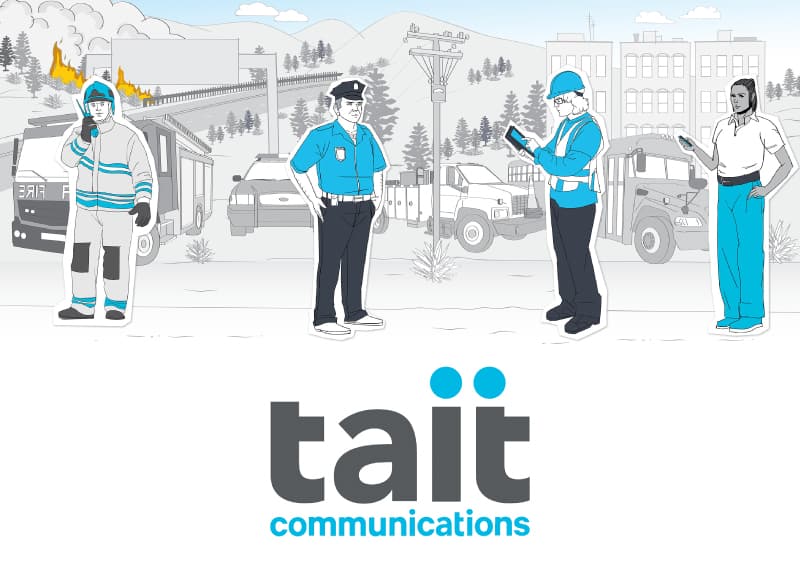
The current explosion of emerging digital technologies is giving access to more information than we’ve ever had at our fingertips. Unified Communications connects individual devices across across PMR/DMR, LMR, LTE and WiFi, creating a seamless “network of networks”.
27th February 2021

In this month’s additional services focus, we are looking at how your radio communications systems life cycle can be supported with extended warranties. Part one gives an insight into what considerations should be made.
31st January 2021

Two way radio has a history spanning over 100 years. Its form may have evolved but it still provides organisations both in the private and public sector with one of the most powerful and reliable forms of communication.
26th January 2021

Three major factors are driving the evolution of transport communication systems: passenger and staff safety, passenger satisfaction, and the efficiencies and productivity unlocked by big data. Discover how Motorola Solutions technologies work at the heart of all these areas.