
Lone workers are people who work on their own without “close or direct supervision.” This means that they are exposed to a higher level of risk, and the UK’s lone working legislation provides guidelines on employers’ responsibilities towards lone workers.
Two key pieces of legislation apply to lone workers:
- The Health and Safety at Work Act (1974)
- The Management of Health and Safety at Work Regulations (1999)
In this article, we’ll provide a broad outline of how these laws apply to lone workers, and the steps their employers must take to safeguard their health and safety at work.
An overview of lone working law in the UK
In simple terms, the law requires employers to assess the unique risks that lone workers may face and to put safety measures in place to protect them against workplace hazards. And in case you were wondering, the “workplace” refers to any site where the employee may be working.
After all, many people’s “workplaces” are construction sites, customers’ properties, or even a vehicle on the open road. Suffice to say that if an employee is acting on your behalf, wherever they happen to be is a “workplace,” and their employers’ legal responsibilities apply.
As a result, employers must consider ways to keep lone workers safe, no matter where they may be. This could take the form of training, a degree of remote supervision, a system that monitors them to ensure they are as safe as possible, and access to support if things go wrong.
To sum this all up, employers are legally required to safeguard health, safety, and welfare at work and the ultimate responsibility for this rests with the employer even when the worker is away from site and working alone.
As a footnote, there are certain tasks that are deemed too dangerous for lone working. These include diving operations and the transportation of explosives. If your risk assessment shows that a task is too dangerous to be undertaken alone, you can assume that it is not legal to require employees to do so.
What is a lone working risk assessment?
If you employ people, you must conduct a risk assessment. If you employ more than five people, you not only have to record the results of your risk assessment, but also identify any employees who are at greater risk than others – for example, older employees, very young employees, employees with health conditions, or pregnant women.
With employers bearing final responsibility for health and safety at work, you may want to consider appointing a specialist consultant to help you with your workplace risk assessment, including lone work risk assessments. These are certified and accredited professionals who are familiar with all the latest advances in workplace health and safety.
Indeed, conducting risk assessments is a profession with a body of knowledge all of its own and you are almost sure to achieve a much more comprehensive risk assessment and risk mitigation strategy when you use a trained professional. This keeps your workers safer and protects you from liability that could come from overlooking a small but important detail. When you employ lone workers, this becomes all the more important because of their elevated risk profile.
What does a lone worker policy consist of?
Once you have performed a lone worker risk assessment, your task is to address these risks by formulating a policy to remedy them so that it can be reasonably assumed that the work is safe to do alone.
Your lone worker policy will include procedures such as the maintenance of regular contact, and it might specify the skills, qualifications, and experience that lone workers must have mastered in order to work safely. It may even specify the health status that applies to lone workers. As a simple example, a person who suffers from epilepsy or a serious heart condition may not be able to work safely on their own in certain environments.
Naturally, your lone worker policy must also specify what should be done in the event of an emergency, and how you will go about training lone workers to follow emergency plans.
With your lone worker policy in place, the next step is to implement it so that you are compliant with legislation applying to lone workers, providing a workday environment that’s as safe as possible, with foreseeable contingencies addressed.
Contact is key to safe working arrangements for lone workers
The amount of supervision and contact with lone workers depends on the riskiness of their work. For example, a person performing maintenance in a hazardous environment may need to remain in touch on a near-constant basis to ensure their safety.
But even people who are working from home are lone workers, and employers are responsible for their health and safety during working hours. In this instance you may want to implement working from home health and safety training, and you should decide on regular contact rules. For example, you should institute check-ins at the start and end of the workday, and provide a means of alerting you if they were to be injured, experienced some form of physical threat or become ill.
However, a lot of lone work is a lot more hazardous than this, and your risk assessments should point toward the steps you need to take to keep employees safe. For example, you should know where lone workers are at any given time during the day and they must be able to raise the alarm if anything should go wrong.
Communications solutions to help you keep lone workers safe
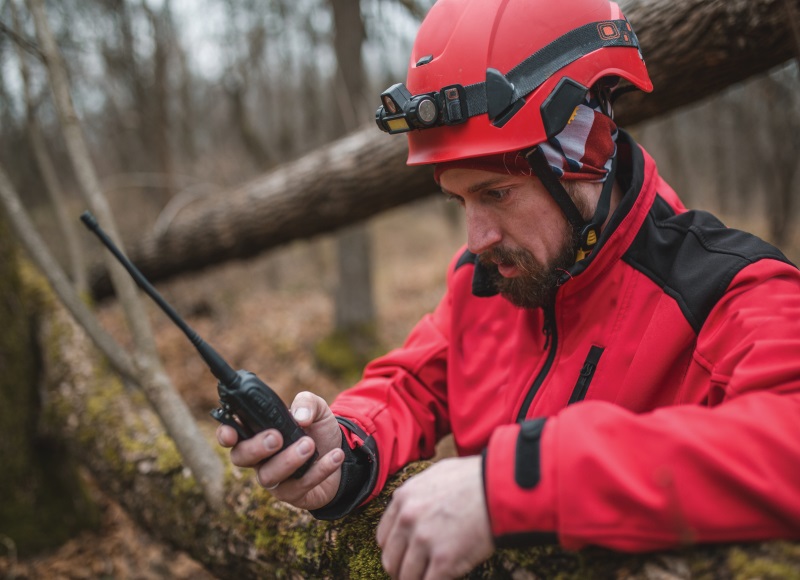
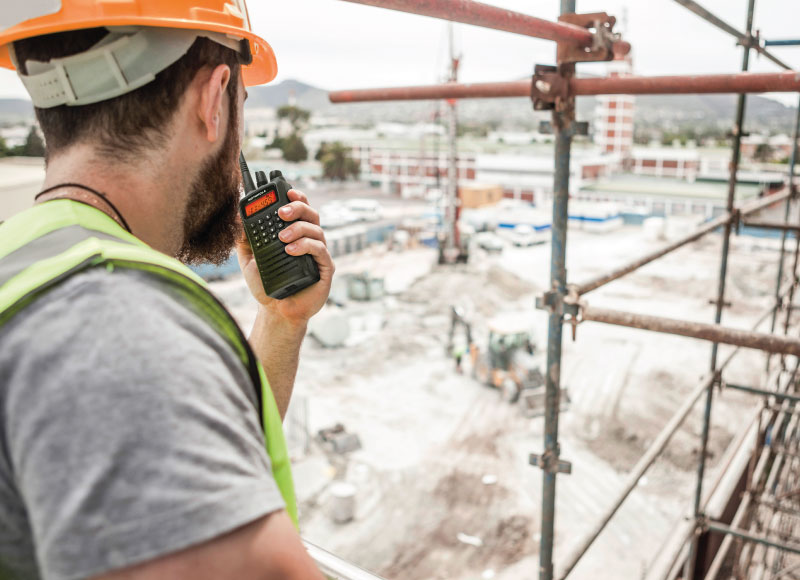
All businesses are different, and at Radiocoms, we recognise that communications solutions must be tailored to your needs. There are multiple benefits to using two-way radio for communications, and this may be a solution that helps you to improve lone worker safety. In other contexts, broadband push to talk (BBPTT) might be an effective option.
To find the solution that works best for you, choose a specialist provider who isn’t locked into any single method or brand. At Radiocoms, we offer a broad portfolio of products, recommending them based on your needs. As communications specialists, our track record spans sectors ranging from construction to healthcare and from educational institutions to aviation. Find out how we can help you today.
Read more

Lone working policy: what it is and why you need one
29th April 2024
The UK’s lone working legislation explained
4th April 2024

What is the purpose of body-worn cameras?
22nd March 2024
Our guide to lone worker safety
4th March 2024

Prioritising health and safety: the need for a proactive approach in today’s workplace
28th February 2024
Our brief guide to construction site safety
16th February 2024

How to support difficult evacuations with Rob Horton, Staffordshire Fire & Rescue Service
4th January 2024

Best practices and considerations for implementing a dispatcher system
10th December 2023
Let’s start a conversation
If you would like further information, or to discuss your requirements onsite:
Book An Appointment | Arrange A Quotation | Call 033 3939 0022