3M™ PELTOR Headsets for Communication
and Hearing Protection.
Peltor by 3M™ – The workers’ choice in hearing protection.
In recent years there has been a significant rise in professional negligence claims against noise-induced hearing loss (NIHL), businesses should consider HPE technologies such as Peltor to safeguard themselves and their employees under the Control of Noise at Work Regulations Act 2005. The act requires businesses to eliminate or reduce risks to health and safety from noise at work.
Here are just a few statistics on hearing loss:
- The Labour Force Survey data reports an estimated 21,000 number of workers with work-related hearing problems recorded between 2016/17 to 2018/19, with a rate of 68 cases per 100,000 people employed in the last 12 months.
- Action on hearing loss reports hearing loss affects over 12 million people in the UK and an estimated 900,000 people in the UK have severe or profound hearing loss.
- AHL also reported through their Hidden Disadvantage report that 70% of people with hearing loss who responded to their survey said that hearing loss sometimes prevented them from fulfilling their potential at work.
- By 2035, hearing loss will affect one in five of us.
- The World Health Organisation predicts that by 2030 adult onset hearing loss will be in the top ten disease burdens in the UK, above cataracts and diabetes.
- Estimates suggest that, in 2013, the UK economy lost more than £24.8 billion in potential output because people with hearing loss were unable to work.
As an employer selecting the right PPE for your workforce especially when it addresses hearing protective equipment (HPE) is imperative. By selecting the right technology to support your employees working conditions you not only increase productivity but also demonstrate an understanding and level of responsibility.
If workers need to withdraw from noisy areas every time they want to have a conversation, the cost to productivity and lost hours can be significant. The comprehensive range of 3M™ Peltor headsets and hearing protectors are designed to operate in a number of working environments and meet most requirements for both communication and hearing protection.

Are you looking for the right hearing protection for use in your workplace but not sure what you need?
Let us help you find the right hearing protection for your needs with the 3M Peltor Communication Solutions selector tool here >
Sharpen your senses with the right hearing protection.

Comfortable options boost compliance.
A common reason that people are careless with hearing protectors is that they choose the wrong one. Too large a unit can be uncomfortable, and hearing speech and other signals may be unnecessarily difficult. The Peltor Hearing protection range provides fine-tuned attenuation level for different noise environments with excellent attenuation and unique acoustic performance. Peltor´s proven and durable designs ensure high comfort levels, allowing long term use under tough conditions.
But how do you know what’s right for you?
The basic rule is that you should always wear hearing protection 100 % of the time you spend in environments with an A-weighted noise level of 85 dB or higher. How damaging the noise environment is to your ears is determined by the noise level and the length of time you spend in it. For example, eight hours in an 85-dB weighted noise level is just as harmful as 15 minutes in a 100-dB A-weighted noise level.
Passive hearing protection.
Hearing protection devices (HPDs) such as passive headsets and earplugs offer a solution to mitigate noise exposure and reduce the incidence of hearing loss among employees who are frequently exposed to noisy environments. The 3M Peltor X Series offers:
- Protection from 27 dB to 37 dB
- Colour-coding to makes it easy to identify the level of protection being worn
- Slim cups offer improved compatibility with other safety equipment
- Bluetooth® wireless technology for connection to a smartphone, even while wearing gloves

Communication headsets.
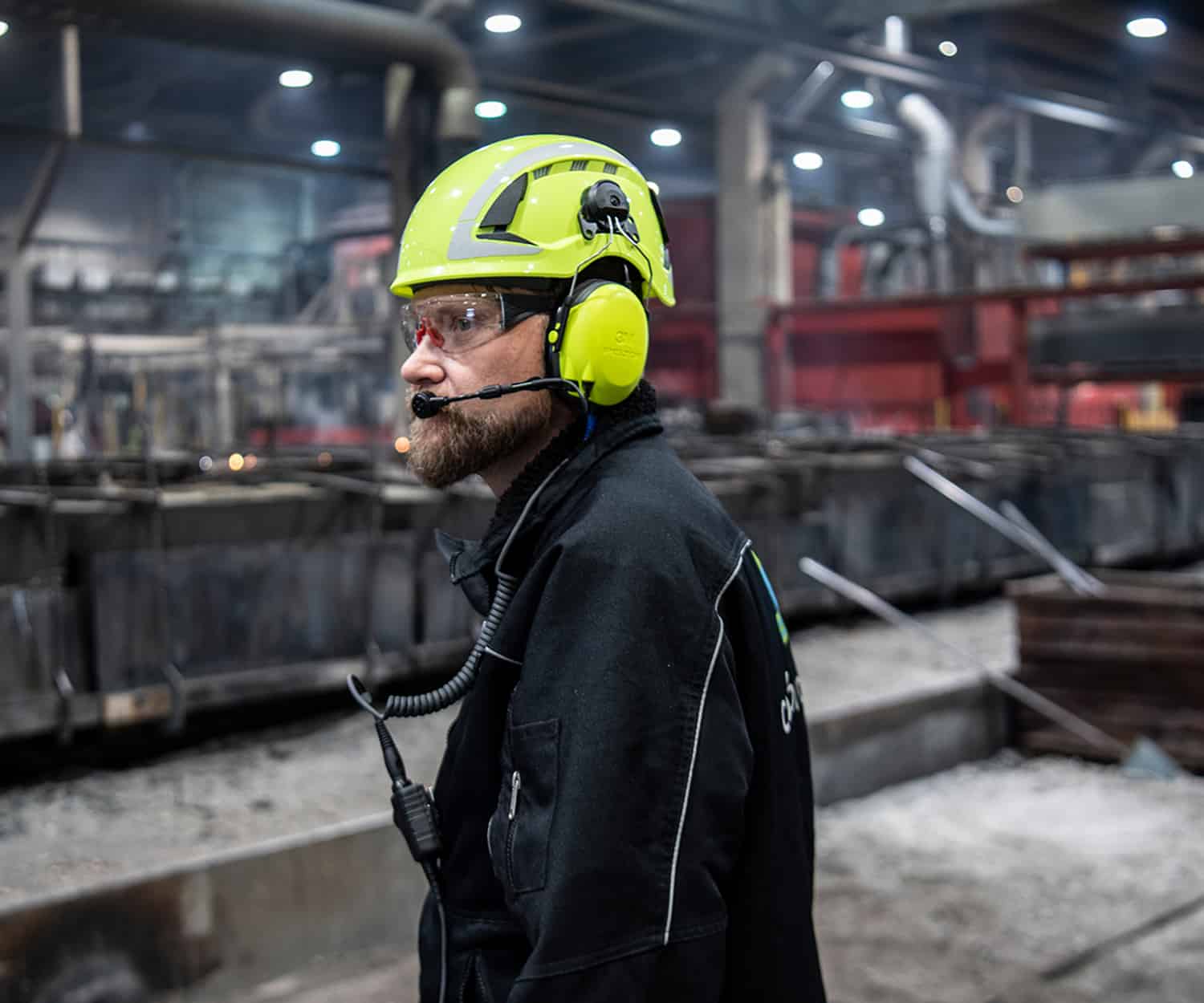
Continuous inter-team communications are crucial in hazardous environments such as manufacturing plants, oil & gas plants, or ground to air operations. Peltor’s communication headsets such as the WS™ ProTac XPI or CH-3 flex offer versatile solutions combining hearing protection and noise suppression with:
- Bluetooth® multipoint technology for simultaneous, wireless connection to two devices
- Environmental listening technology to hear environmental sounds in low noise and protect when it’s loud
- Noise-cancelling microphone rated to IP68
- Voice operated transmission (VOX) for hands-free operation in high noise environments
Active hearing protection.
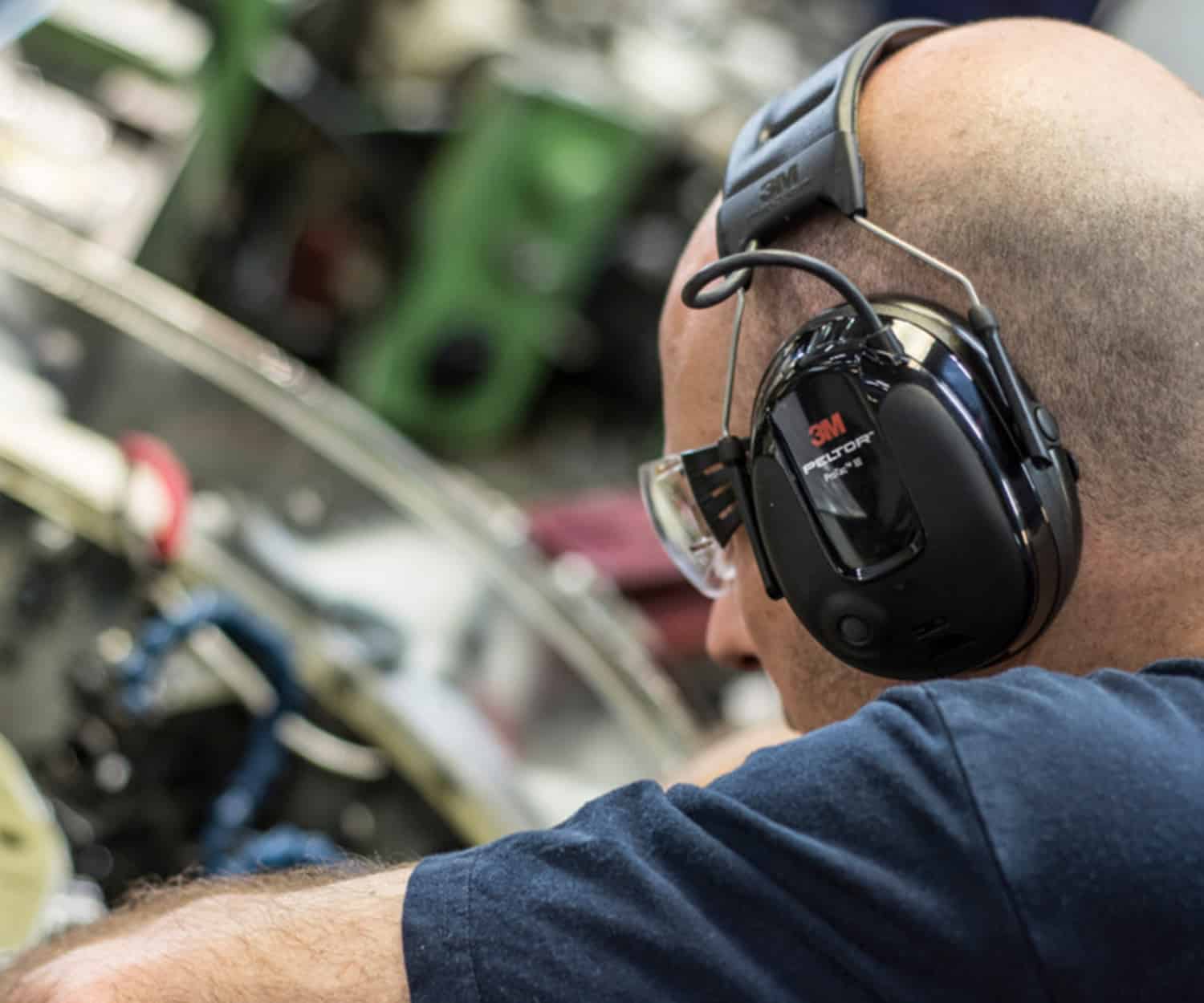
Active hearing protection offers a solution to teams who need to limit the intensity of background noise such as conversations, machine sounds and warning signals whilst still providing surrounding situational awareness. Peltor’s active hearing headsets such as the ProTac™ III Headsets offer:
- 3.5 mm stereo jack to connect to your mobile phone or two-way radio
- Auto power off turns headset off after 4 hours of non-use, to save energy and auto low-battery warning notification
- Voice guided menu system so no need to take your headset off

Versaflo™ respirator.
The 3M range of powered and supplied air respiratory protective equipment (RPE) systems offer comfortable, integrated protection against multiple hazards providing respiratory, head, face, eye and hearing protection. Their ease-of-use can improve productivity in the workplace. Utilise with the 3m LiteCom solution for the complete communications solution.
- Lightweight, compact and well-balanced face shield with a comfortable face seal for dusts, spraying and chemical processing
- Increased control and comfort with the deflector which allows users to direct the airflow inside the head top
- Spare parts and accessories are quick, easy and intuitive to replace
- Visor design combines excellent peripheral and downward vision with good optical clarity
- Coated Polycarbonate visor provides added chemical and scratch resistance.